


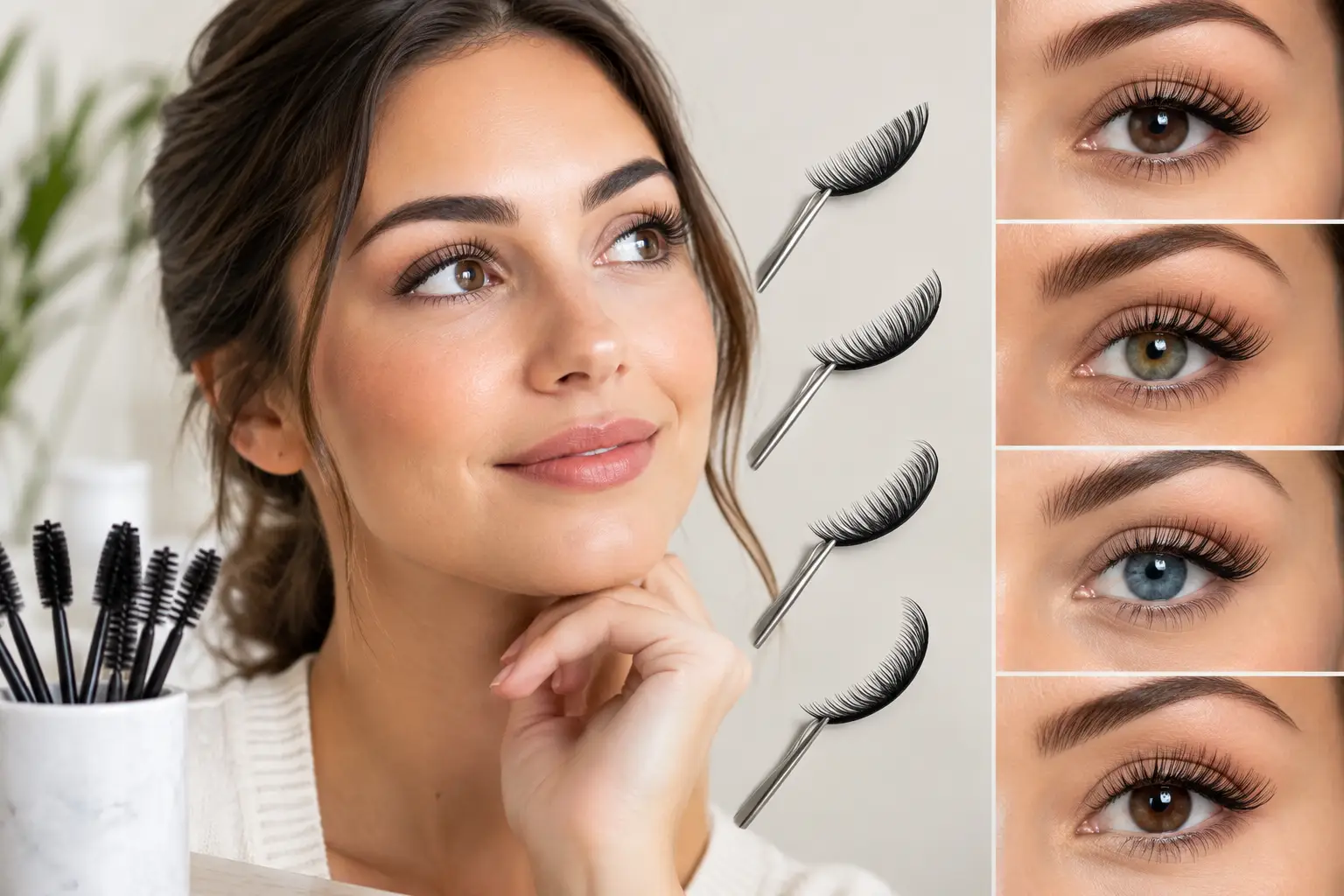
How to Choose a Lash Curl for Your Eye Shape

A lash set can be beautifully applied and still feel slightly wrong if the curl is not suited to your eyes or natural lashes. Knowing how to choose a lash curl is what turns extensions from simply noticeable into a flattering, comfortable enhancement that makes your eyes look more awake every day.
The best curl is rarely the most dramatic one. It is the one that works with your natural lash direction, eyelid shape, facial features and the amount of definition you genuinely enjoy wearing. A thoughtful consultation should consider all of these factors before a single extension is applied.
What a lash curl actually changes
Lash curl describes the curve of an extension from its base to its tip. It affects how lifted, open, soft or defined the eyes appear. Curl also changes the visible length of the extensions. A stronger curl can look shorter from the side because it turns upwards sooner, while a gentler curl often gives more of a lengthening effect.
This is why choosing a curl is not only about whether you want a natural or glamorous result. Two clients can request the same style and need very different curls to achieve it. Someone with naturally upward lashes may need a subtle curl for balance, whereas someone with straight or downward-pointing lashes may benefit from a more lifted option.
Curl names can vary slightly between lash brands, but the most common choices are J, B, C, CC, D and L curls. Rather than treating them as a fixed scale, a trained lash specialist will assess how each option sits against your natural lashes.
How to choose a lash curl for your features
Start with your natural lash direction
Your natural lashes provide the foundation for every extension. If they grow straight, a C or CC curl may create a visible lift without looking overdone. If they point downwards, a D curl or a carefully placed L curl can help open the eye area, provided your natural lashes are healthy enough to support it.
For naturally curled lashes, a B or C curl can often look more harmonious. Applying a very strong curl to already lifted lashes can create too much separation between the natural lash and extension, which may affect retention and make the result appear less polished.
The aim is secure attachment along the natural lash. A curl that is technically striking but offers poor contact is not the right choice for long-lasting, comfortable wear.
Consider your eyelid and eye shape
Your eye shape has a major influence on where lift is most flattering. Hooded eyes often benefit from curl concentrated through the centre or outer section of the lash line. This helps bring the lashes forward from beneath the lid and creates a brighter, more open appearance. However, placing an extremely curly extension everywhere can cause the tips to touch the brow bone or disappear beneath a heavier lid.
For monolids, straight lashes or lids with less visible crease space, stronger curls such as CC, D or L can create definition that remains visible when the eyes are open. L curls have a flatter base before turning upwards, so they can be particularly useful for straight natural lashes. They are not automatically the best choice for every client, though, as placement and natural lash strength still matter.
Round eyes can look especially balanced with a soft C curl and an elongating shape, rather than maximum lift across the entire lash line. Almond-shaped eyes are versatile and can suit many curl types, from subtle B curls to more pronounced D curls, depending on the desired finish. For downturned eyes, adding controlled lift through the outer third can create a gently elevated effect without making the lash line look heavy.
Decide how visible you want the result to be
A natural-looking set does not mean your lashes must look flat. It means the curl, length and density work together in a way that suits your face.
B curls offer a very soft, almost mascara-like enhancement. They are often a lovely choice for clients who prefer understated grooming, wear glasses, or have naturally lifted lashes. C curls are a popular middle ground: defined enough to brighten the eyes, yet versatile enough for everyday office wear, weekends and special occasions.
CC and D curls create more noticeable lift and can deliver the fresh, wide-awake effect many clients want. They suit clients who enjoy a more polished finish, use little eye make-up, or want their lashes to hold their own in photographs. The trade-off is that stronger curls are more visible, so they need to be selected with precision rather than simply chosen for impact.
The common lash curl types, explained
A brief guide can be helpful, but your final choice should always be individual.
J curl is very gentle and close to the curve of a straight natural lash. It is subtle but is less commonly used for a visibly lifted extension set.
B curl provides a soft, natural enhancement, particularly for naturally curled lashes or clients who want a refined finish.
C curl creates a classic lift that suits many eye shapes and works well for natural to softly defined sets.
CC curl sits between C and D, offering extra brightness and a more noticeable curl without the full drama of D.
D curl is strongly lifted and ideal for clients who want a wide-eyed, make-up-ready look or have downward-growing lashes.
L curl has a straighter base with a sharp upward bend. It can be effective for straight lashes, hooded lids and monolids when applied by an experienced specialist.
Some salons also offer M curls or other specialised curls. These are not better by default. They are tools for specific lash directions and styling goals.
Why one curl across every lash is not always best
A customised lash set may use more than one curl. This is often the difference between a set that looks intentionally tailored and one that feels generic.
For example, a technician may use a softer curl on the inner corners to keep them comfortable and natural, then add more lift through the centre to open the eyes. A slightly stronger curl at selected outer lashes can support an elevated shape, while a gentler curl at the very outer corner may prevent the eye from appearing pulled down.
Mixing curls should be subtle and purposeful. Too much contrast can make the lash line look uneven, particularly as natural lashes grow and shed at different stages. The goal is a smooth, naturally beautiful transition rather than a visibly striped effect.
Do not choose curl without considering length and weight
Curl, length and diameter are closely connected. A strong curl combined with excessive length can create a top-heavy look and place unnecessary strain on natural lashes. This is especially relevant if your lashes are fine, sparse or recovering from previous damage.
A responsible specialist will choose extensions that your natural lashes can safely support. A lighter, carefully styled set can often look fuller and last better than heavy extensions applied for immediate drama. If your priority is a healthy, low-maintenance result, balanced weight and good attachment matter as much as the curl itself.
For clients who wear glasses, curl deserves extra attention. Strongly curled or very long lashes may brush against lenses, causing discomfort and affecting how the set wears. A moderate curl with considered length can still give a lifted look while keeping your lashes clear of your frames.
Think about your routine, not just your reference photo
A reference photo is useful for showing the mood you like, but it cannot account for your own eye shape, natural lash condition or daily habits. Consider whether you want a discreet everyday result for work, a soft wispy style, or fuller definition for events and photographs.
If you exercise frequently, wear glasses, sleep on your side or have a fast-paced schedule, comfort and retention may be higher priorities than an exaggerated curl. If you have an important event, you may prefer a little more lift, provided it remains suitable for your natural lashes. The best choice should still feel like you when you see it in daylight, not only under salon lighting.
When a lash lift may be the better option
If you love your natural lash length but want them to look more lifted, a keratin lash lift may be a better fit than extensions. It works by reshaping your own lashes at the root, creating a soft upward curve that can make the eyes appear brighter with minimal upkeep.
A lash lift is particularly appealing for clients who prefer a bare-faced look, have active routines, or want to avoid regular extension infills. Extensions offer more control over volume, length and styling, while a lift offers a naturally enhanced result using your existing lashes. Neither is universally better - it depends on the look and maintenance level you prefer.
Let your consultation guide the final choice
A good lash consultation should feel reassuring, not rushed. Your specialist should look at your natural lash health, direction, eye symmetry, lid space and desired style before recommending a curl. They should also explain if a requested curl is unlikely to retain well or flatter your features, then offer an alternative that will.
At Skinlash, customised lash recommendations are designed around a result that feels comfortable, polished and naturally suited to you. Whether you prefer a soft C curl or a brighter, more lifted finish, the right curl should complement your features and make getting ready feel that little bit easier.
📍 Address: 29 Teo Hong Road, Singapore 088335 📞 WhatsApp / Booking: +65 8787 7236 Book your appointment today and discover personalised beauty care at Skinlash!


Comments